
The Constant Struggle to Explain Supply Chains with Data
How to connect fragmented systems into end-to-end, data-driven operations to improve sales and delivery? At our Data & AI breakfast event, Adam Burnage, Senior Manager, KPIs and Analytics, Metso, shared practical insights from a successful transformation and what it really takes to get there.
Why to Start Data-Driven Operational Excellence Journey?
Most companies working with supply chain data are trying to answer the same fundamental questions:
What factors impact on-time delivery?
What are the root causes of delays?
How can I see a customer order all the way through to the supply chain?
How can we move towards automation and AI in processes?
These questions sound straightforward, but answering them is not. As Burnage put it, it requires modeling data from quotes through to invoice without gaps. That end-to-end visibility is the foundation everything else is built on.

What Does Modern Data Work Look Like?
For a long time, the highest ambition in data analytics was reaching predictive or prescriptive analytics. Dashboards became more automated, more always-on, more widely accessible. That was a genuine step forward. But as Burnage argued, it has not answered all the problems organisations were trying to solve. There are already enough Power BI reports in the world.
What comes next is something different. Burnage outlined several shifts defining modern data work:
Action-forward mindset. It is no longer enough to show what last month looked like. The question is how data drives a real-world change, not just reflects it.
Interactive data. Data needs to become something you engage with rather than just look at, feeding back into the system and improving models over time.
Truly end-to-end modelling. Supply chains have purchasing, sales, and invoicing processes that are linked, but in most organisations the underlying data is fragmented. Building those linkages is what makes everything else possible.
Holistic tools and products. The goal shifts from building reports to developing whole ways of working that re-engineer how work actually happens.
On the question of real time, Burnage borrowed a line from The Smiths: “How soon is now?” His answer: real time means as fast as the process needs. The more data becomes an operational tool, the faster that needs to be.
Done well, this enables knowledge-driven leadership including E2E metrics, conversational analytics, and reporting but more importantly, re-engineered operations and measurable impact on how the business actually run.
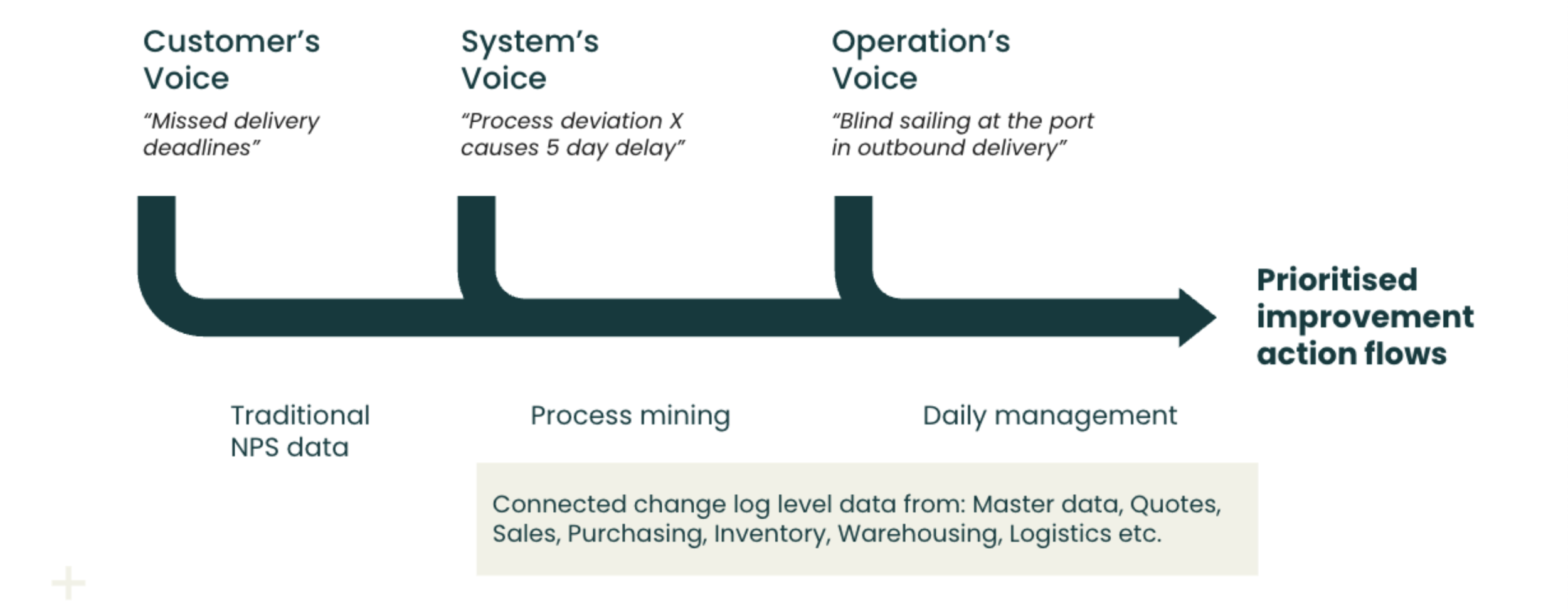
Process Intelligence: Three Voices That Explain What the Data Can Not
Understanding how processes actually flow, not just how they are designed to flow, requires developing data and processes together. Burnage framed this around three distinct voices that together paint a complete picture:
The customer's voice. What the experience looks like from the outside, captured through traditional NPS data and missed delivery deadlines.
The system's voice. What process mining and connected change log data from master data, quotes, sales, purchasing, inventory, warehousing, and logistics can tell you. A system can identify that a process deviation causes a five-day delay.
The operations voice. What the system simply cannot see. Burnage gave a concrete example: blind sailing, when a boat passes a port without stopping and the next one is two weeks away. A core ERP system would have no idea why the delivery was late. That context has to come from the people doing the work.
When these three voices are connected and operations teams are living in the tool daily, they become a source of insight, not just a source of data. The goal is for prioritised improvement actions to flow from that combined picture.
Balancing Value-First Opportunities and Long-Term Capability
One of the hardest tensions in this work is between moving fast and building something that lasts. Chasing quick wins alone leads to a collection of small, disconnected solutions bolted together in the hope they work. You need the architecture, the drawing of what you are building and where it is going.
“If you lose sight of value, you become irrelevant. Just a cost.”
The balance shifts over time. Burnage shared that the first product his team worked on took eight to nine months to reach something usable. A new product scoped last week had a working demo ready within four days. Once the foundation is in place, the data modelled, the context built, the organisation aligned, new value can be created fast. The long-term investment is what makes the short-term delivery possible.

Adam Burnage, Senior Manager, KPIs and Analytics, Metso
Adam Burnage leads the Metso Aftermarket analytics team, where he champions data and AI initiatives that are reshaping how the business operates.
This post is a summary of his presentation at our Data & AI for End-to-End Operations breakfast event.