
Process Intelligence and AI: Real Insights from the Field
Most enterprise AI initiatives continue to stall between pilot and scale. What does it actually take to make AI deliver ROI and why is process intelligence the key? We brought together process, AI and business transformation leaders to explore exactly that in the Process Intelligence and AI breakfast.
Jori Stjerna, Director of Modernization Transformation and Growth at KONE, and Suvi Rantonen, Head of Process Excellence at Vaisala shared practical insights from the field alongside Antton Ikola from Vuono Group and David Brydges from Celonis. Four speakers. One recurring theme.
The Bottleneck Isn't Where You Think It Is
Vuono Group's Antton Ikola opened with a provocation. We have more data, more models, and more AI capability than ever before. And yet value isn't coming out the bottom.
It's tempting to blame technology but that's not the real gap.
“What throttles the output in enterprise setting is not the technology, it is the organisation and business processes around it.”
The numbers we all know bear it out: 62% of enterprises are experimenting with AI agents. Fewer than 10% have scaled them to real value. The drop happens at scale, exactly where the organization has to change.
Ikola illustrated why with a single example. One agent, one task and one process step often means three dependencies with three different owners. The data was never the missing piece. The missing piece is that nobody connected these people around one process, with one goal.
Process intelligence gives cross-functional teams a shared picture to gather around. The difference is not capability. It's ownership.
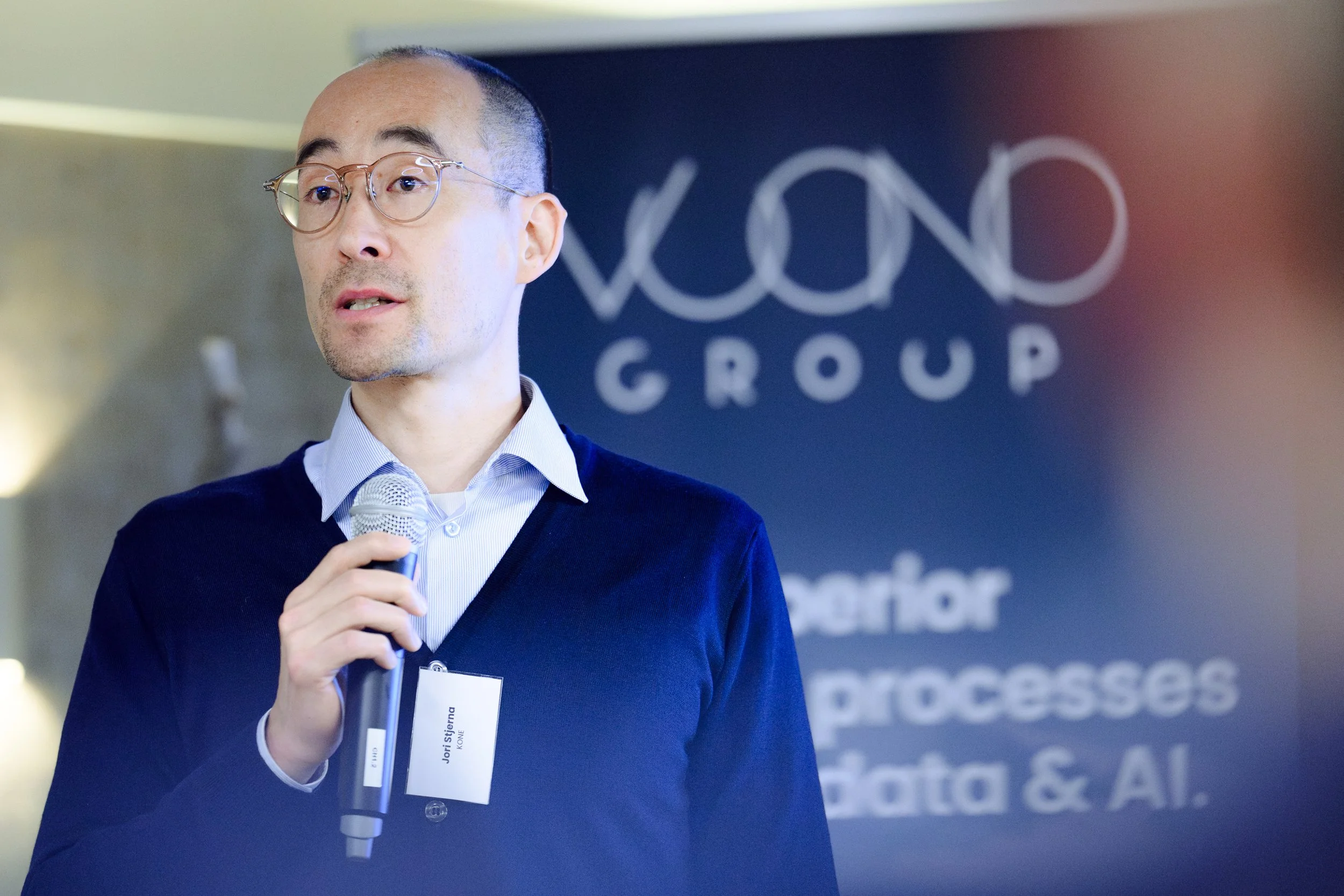
Jori Stjerna, Director of Modernization Transformation and Growth, KONE
Process Intelligence in Practice – a View from Growth Strategy to Global Operations
For a long time, the highest ambition in data analytics was reaching predictive or prescriptive analytics. Jori Stjerna, Director of Modernization Transformation and Growth at KONE, brought the operational reality into focus.
Stjerna underlined that there is no process intelligence without a solid data foundation. If data lives in separate systems and end-to-end visibility is fragmented, decisions slow down and improvement becomes guesswork.
“We lead with facts, and that changes business results.”
What process intelligence enables is a shared understanding across leadership. Bottlenecks become visible, impact becomes measurable, and improvement resources can be directed where they actually matter. But visibility alone is not enough. Stjerna was direct about the next challenge of speeding up the loop from insights to action and back again.
“Process intelligence is no longer just analysis. It’s becoming how modernization gets executed.”
That's where AI enters. Stjerna sees process intelligence as the foundation that makes AI agents useful in practice identifying outliers, surfacing action recommendations in real time, and closing the gap between knowing and doing. Trust the data, share the insights across silos, make work easier for people first and increasingly for AI.
The Missing Context Layer
AI has moved from magic to operations, and now the question is proof. David Brydges, Lead Value Engineer at Celonis, framed the enterprise AI challenge in simple terms.
Personal AI delivers productivity. Enterprise AI requires operational transformation and that's a different problem entirely. The challenge isn't AI capability. It's operationalisation across thousands of people, hundreds of systems, and millions of decisions.
“AI is a brilliant generalist. Your business needs a specialist.”
The core issus is that business runs on operational reality. Your suppliers, your delays, your approvals, your risks. A generalist sounds plausible when it answers questions about these. A specialist actually understands your business.
Without that operational context, AI can sound confident while missing the point entirely. "We're seeing a spike in demand – should we reorder?" A model without context says: demand is rising, you may want to reorder. Technically not wrong. Operationally useless. Real decisions need inventory levels, supplier lead times, customer commitments, and risk signals all in the same view.
At enterprise scale, being approximately right is often completely wrong.
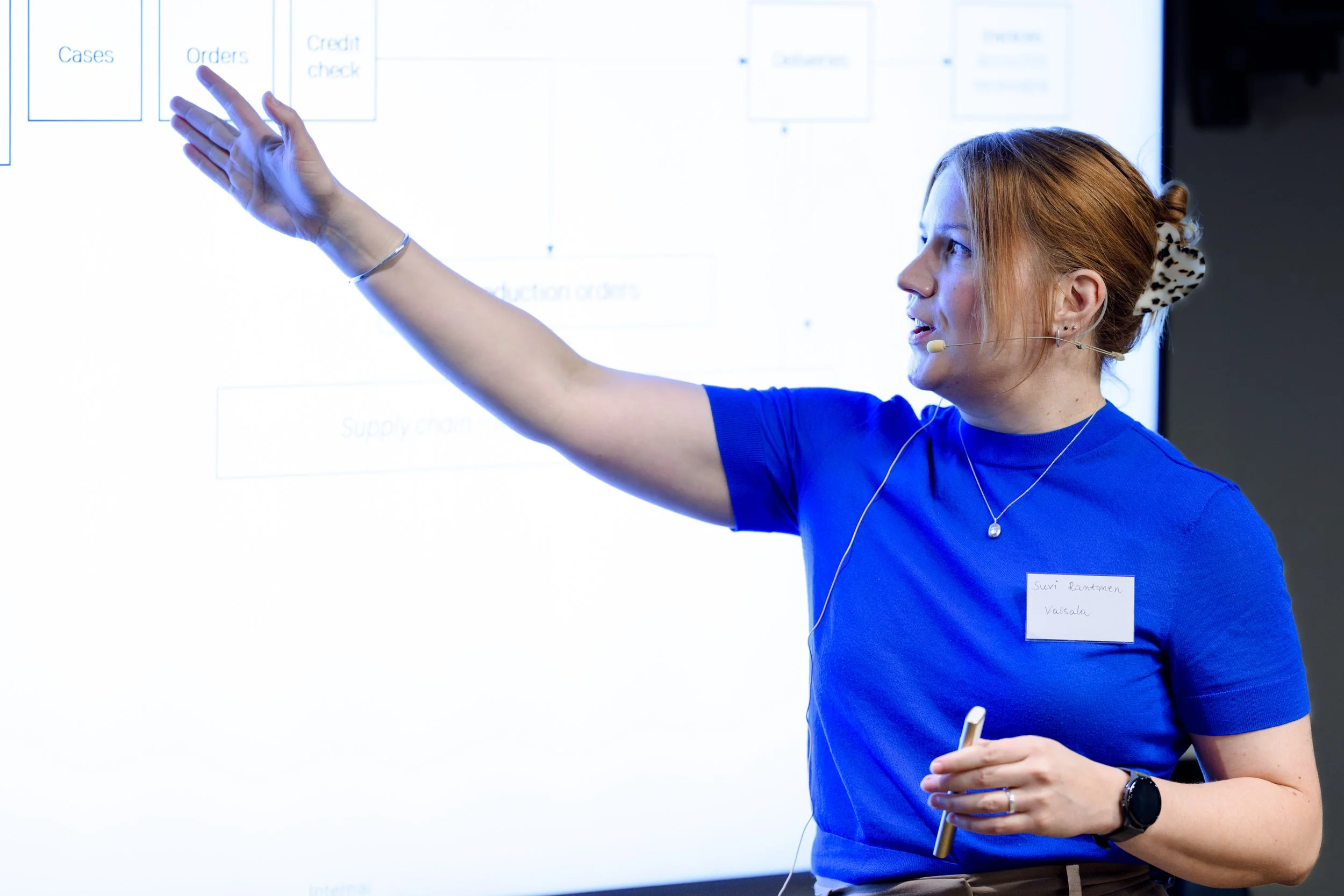
Suvi Rantonen, Head of Process Excellence, Vaisala
Building the Foundation for Process AI
Head of Process Excellence Suvi Rantonen from Vaisala closed the morning with a perspective on what it takes to get there.
“Process intelligence isn’t just about visibility. It’s the context layer that makes process AI trustworthy.”
Rantonen's framing was precise. Process data tells you what is actually happening in operational value streams. Business knowledge tells you what it means. Process intelligence is what emerges when you combine these – the deviations, the patterns, and the questions you didn't know to ask. Without that combination, AI has neither memory nor judgment.
The goal is AI that actually knows your business. Rantonen described building toward a process copilot that can answer natural language questions grounded in real process data. Instead of generic or “hallucinated” responses, insights are always rooted in how the business actually runs, across end-to-end processes from lead to cash to manufacturing. And the AI can also tell if it doesn’t have the answer.
The next step, in her view, is industrialising AI insights across end-to-end processes. Not isolated automations, but a foundation built phase by phase that makes AI recommendations trustworthy enough to act on at scale.
This is Where We Start
The through-line from all four sessions was clear. The technology is here. What's still being designed is the organisational layer around it - the ownership, the cross-functional teams, and the process foundations that turn AI from a pilot into a production system.
The leading organisations and the professionals driving their transformation are already operationalising this. The goal was never to automate what exists. It's to build something better.