
AI Transformation Challenges What Your Company Considers "Intelligent"
AI transformation is also about people. People don't resist technology. They fear losing control and the expertise they've spent years building. If leaders want employees to imagine something new, they first need to clear away old structures: team boundaries, outdated metrics and unwritten rules.
In consumer foresight projects, we always started with one question: What is this phenomenon really about? (i.e. What is drinking coffee actually about?)
For AI, the answer is "the ability to perform tasks considered intelligent." So AI forces us to re-examine what our organisations count as intelligent work, and who gets to be the expert. For leaders, it's a systems question. For employees, that's personal.
“AI forces us to re-examine what our organisations count as intelligent work, and who gets to be the expert. For leaders, it’s a systems question. For employees, it’s personal.”
In my conversations with leadership teams, three sources of friction keep coming up:
Change can't be left to individual teams. An employee might see that the whole chain, from sale to invoice, needs an overhaul. At the same time, they has no authority to step onto a neighboring team's turf.
Left to individual teams, change hits a wall of tight budgets, processes and legacy software. AI transformation needs a mandate from top leadership that cuts across the organisation, and a plan that is actually followed. That's why many of our large clients have a "Transformation Office": a cross-functional team whose only job is to clear the way across internal boundaries.Daily routine beats good ideas. One executive told me: "Nobody asks in meetings, 'Did you use the new way?' because it isn't tracked in any metric."
If a strategic AI goal isn't linked to daily work and performance reviews, it stays stuck in keynote speeches. Some clients now design management systems built for AI. With one, I was building a new end-to-end view of the customer. Handoffs between business units are where ownership and metrics fall through the cracks. They're also some of the best places for AI to act as a bridge.Blind spots filter out new ideas. Unwritten rules ("this is just how our business works") filter out even the best innovations, and the most experienced people are often the most affected.
Creativity researcher Margaret Boden describes three kinds of new ideas: combining familiar things (combine), finding something new within the rules (explore) and changing the rules (transform).
Transformation needs an outside shake-up. Examples include shadow boards where younger employees challenge leadership's assumptions, peer groups from totally different industries, and "what-if" future scenarios.
Becoming an AI-Native Organisation
So what’s the solution? People are bad at imagining how a radically different future would feel to them personally. We overestimate what we'll lose and underestimate our ability to adapt.
Employees can imagine a new organisation in the abstract. They just can't picture themselves in it without feeling a loss. And that hurts.
To become an AI-native organisation, we need:
Several alternative visions at first, because there's no single clear path.
A way to make unwritten rules visible, so we can remove them one by one.
A cross-team mandate with clear ownership, a change plan and time, including time to fix the half-finished or broken business processes left from past rushes.
Space for people to work through their fear of loss before they're asked to imagine the future with enthusiasm.
We don't yet have a settled way of thinking about AI as a phenomenon, so familiar ways of working won't do. But that uncertainty also lets us choose what future we build, and what we value as intelligence in an organisation.
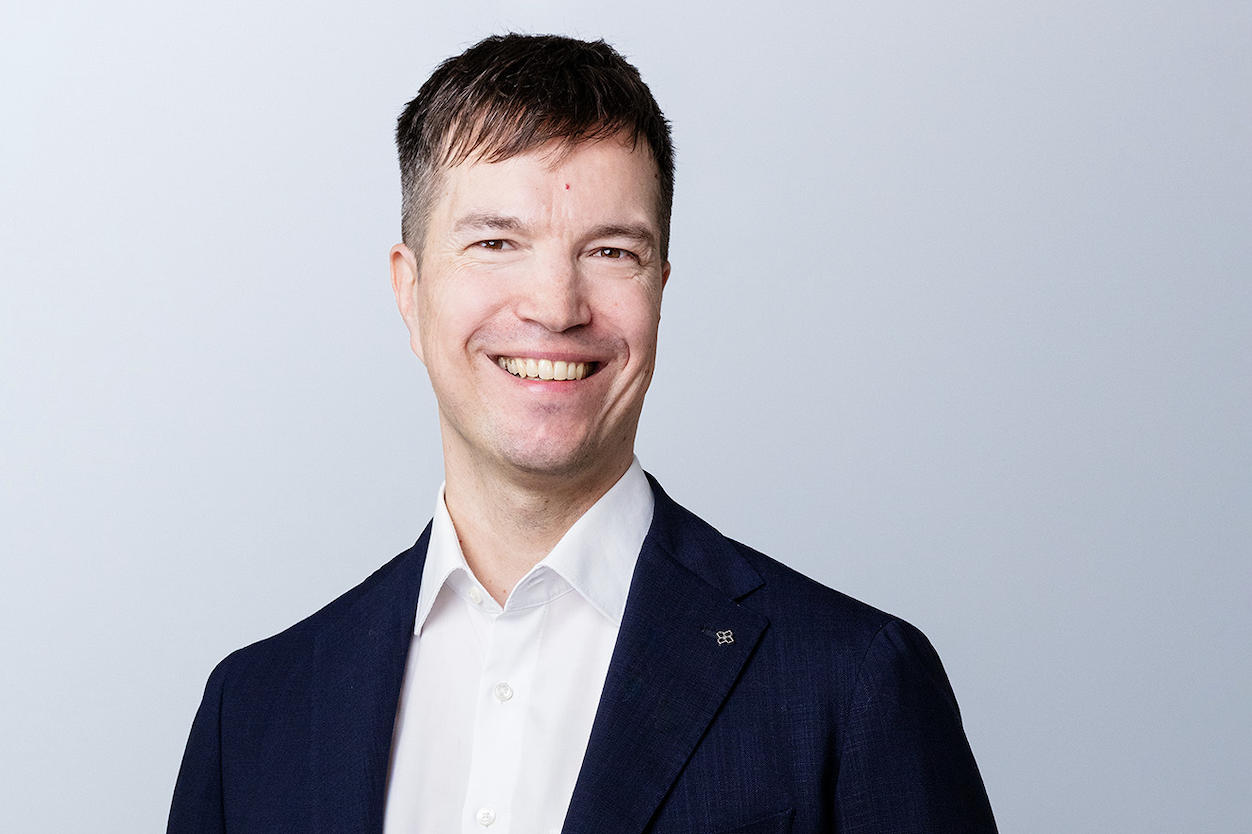
Petri Rikkinen
VP, AI Transformation
Petri is helping companies turn AI into real business value and lead the shift. He has more than 15 years of senior consulting experience, including roles at Accenture and Futurice and, most recently, leading Business Finland's strategy renewal for AI. Also a trained psychotherapist, Petri brings a rare view of how organisations actually change.