
SATO’s ERP Transformation Enables Continuous Improvement and Value Creation for the Long Term
For SATO, one of Finland's leading housing providers, ERP transformation was not a sprint but a marathon. Faced with a heavily over-customised legacy system that constrained business development, SATO embarked on a transformation with a clear, forward-thinking vision: the new ERP platform would not be the final destination, but the launchpad for continuous evolution of the entire business architecture.
“Our guiding principle was that the go-live is not the end point of transformation. Instead, our phased approach allowed us to manage complexity and build internal capabilities along the way.”
– Johannes Ervamaa, CDO at SATO
From a Legacy System to a Future-Proof Architecture
SATO’s old, industry-specific ERP system was heavily customised and had become a barrier to business. It was the all too common case, where technology dictates business rather than the other way around: business processes were hard-coded into the system, and any change was complex and slow.
To break free from these constraints, the goal was to establish a solid baseline, a minimum viable product (MVP), that would empower the organisation to begin its real work: continuous improvement driven by business needs.
Instead of a large-scale ERP implementation, SATO opted for a phased transformation that continued for 3,5 years. During this time, SATO was able to move away from the limitations of the old system and build a scalable, modern architecture for future development.
The transformation was a significant undertaking, involving seven distinct projects and a complete shift to a cloud-native Microsoft Dynamics 365 infrastructure. As each project went live, a dedicated internal team took ownership of its ongoing development, ensuring that all business-critical functions were supported by in-house expertise.
The Main Guiding Principles for a Successful Transformation
A clear set of primary principles guided SATO’s initial planning:
Full control over business-critical functions: SATO made no compromises in this area. They committed to staying within the Microsoft ecosystem, leveraging its roadmap for future development rather than creating bespoke customisations, unless required to meet the unique needs of the business.
Standard solutions for non-business-critical functions: For any function that was not critical to the business, SATO committed to using standard, out-of-the-box solutions to maintain simplicity.
Building internal competence: A key part of the strategy was to create a strong internal team with the skills and understanding to manage and develop the new systems, and support the all-important business-critical functions.
The Power of Open Communication
One of the biggest enablers of SATO’s smooth transformation was the open and honest communication with top management. It fostered a shared understanding of the journey ahead and secured the necessary support for both ongoing and future initiatives.
In addition, teams involved in the transformation met live as much as possible to transfer knowledge between the seven projects. Maximising face-to-face time proved to be one of the key success factors: the shared vision grew stronger, there were fewer misunderstandings, and the team spirit with both internal and external members was driving the transformation forward.
Future Ambitions in Data-Driven Decision-Making
SATO’s ERP transformation was not merely a technical migration to the cloud, but a fundamental shift in mindset. The goal was to unlock the value of its business data, which was not possible with the old ERP system.
SATO is now looking to the future: the ambition is to move from reactive reporting to proactive, intelligent decision-making. They are currently working on securing high-quality, accessible data to further leverage advanced analytics and AI to uncover predictive insights, optimise operations, and drive strategic growth – all things the transformation set out to achieve.
Key Learnings from SATO
Treat go-live as the beginning, not the end: View the initial ERP implementation as a Minimum Viable Product (MVP) that creates the foundation for ongoing, business-led improvement. The real transformation starts after the system is live.
Let technology enable, not dictate: A modern ERP transformation is a strategic shift to ensure technology serves as an enabler of business agility, rather than a rigid constraint that dictates processes.
Build a strategic, future-proof architecture: Avoid the trap of over-customisation. By committing to a standard platform and ecosystem, organisations can ensure their ERP remains scalable, agile, and open to future innovation.
SATO’s transformation equipped the business with the tools and the autonomy to design and refine its services and processes on its own terms. Their ERP journey stands as a powerful example of how a transformation, when viewed as a starting point rather than an end goal, can unlock an organisation’s true potential for growth and continuous improvement.
ERP is not an IT project.
It is a business transformation.
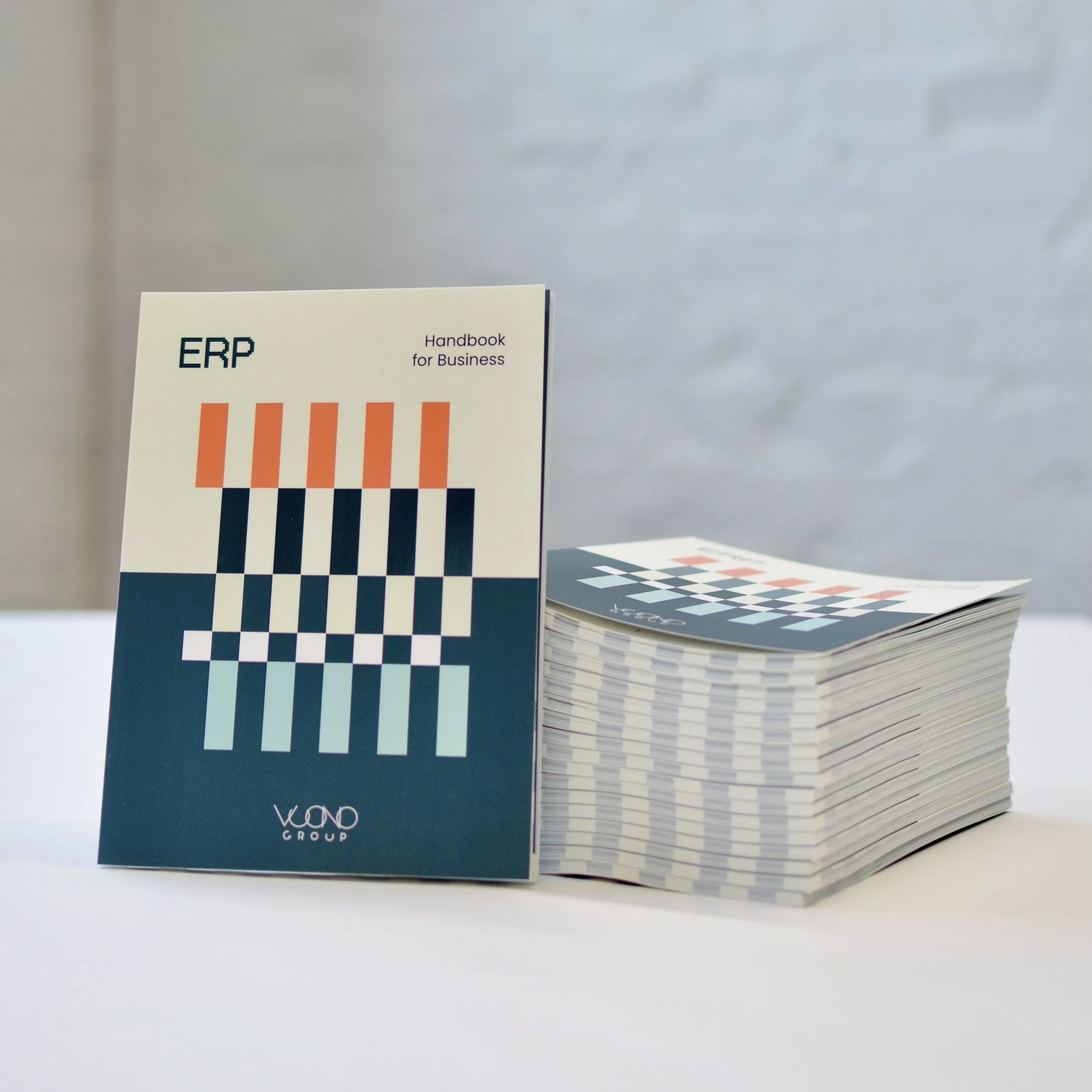
This case study is part of our ERP Handbook for Business, a complete, experience-based guide to leading a successful, business-led ERP transformation.